

Introduction
The academic advisory solutions of institutional excellence are the strategic pulse of contemporary higher education. In a world where the retention and success of students are the main priorities, the application of these data-driven structures guarantees that each learner is provided with individualized and proactive assistance. In case academic advisory solutions are put into high priority by universities when it comes to institutional excellence, universities bridging the gap between enrollment and graduation, make that experience of the student not to be a series of administrative hurdles to jump through, but a path to achievement.
The implementation of these systems by institutions creates a culture of responsibility and accuracy and allows faculty to mentor effectively as well as giving administrators the authority to exercise oversight to assure global prestige and sustainability in the long term.
The Evolution of Academic Advising
The academic advising process has progressed well above the old-fashioned course registration meeting. It is now known as a comprehensive strategy combining career guidance, psychological assistance and educational planning. Achieving the peak of performance requires an institution to implement academic advisory solutions that harmonize human empathy with technology.
In the past, the advising process was reactive, whereby the process would only intervene after a student had failed a course. However, the modern standards require a proactive approach. Through predictive analytics and communication systems which are integrated, universities can be aware of struggling students before their GPA falls. These academic advisory solutions are a critical safety net that can help the individual scholar and also the overall ranking of the institution.
According to Academic Advising and Institutional Success , “As higher education across the globe acclimates to the disequilibrium caused by change, the stature and legitimacy of academic advising will rise, which will further inspire and require practitioner engagement on campus.“
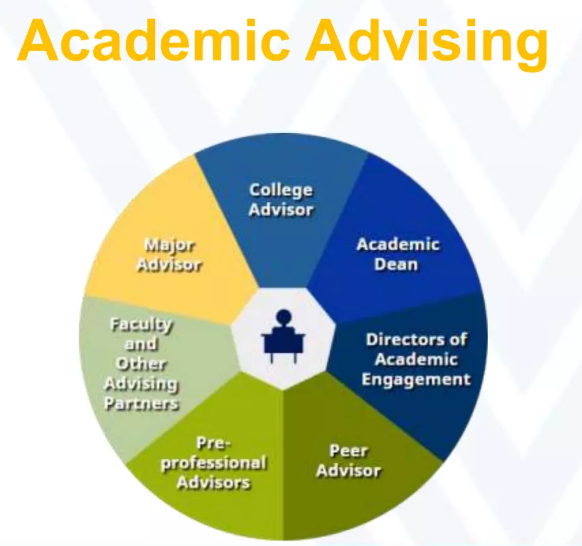
The Pillars of Modern Academic Advisory Solutions
To achieve true institutional excellence, advisory systems must be built on a foundation of integration, accessibility, and data integrity.
1. Data-Driven Predictive Analytics
Academic advisory Solutions is based on predictive modeling as a solution to institutional excellence. Historical analysis helps institutions understand the trend that contributes to student attrition.
- Early Warning Systems: Automated alerts triggered by missed assignments or low midterm scores.
- Course Sequencing: Identifying “bottleneck” courses that frequently delay graduation for specific majors.
2. Holistic Student Profiling
A student is not just a ID number. The art of advising needs to be 360-degree in terms of seeing the student holistically, which involves their financial aid situation, extracurricular activity, and career goals. This enables the advisors to offer contextual advice, which appeals to the life situations of the student.
3. Integrated Communications Hubs
The adversary of institutional achievement is information silos. An integrated advisory system would make sure that an advisor, career counselor, and financial advisor are all referring to the same information of a student. This eliminates advisory fatigue where a student can get conflicting advice in various departments.
Comparing Advisory Models: Traditional vs. Excellence-Driven
| Feature | Traditional Advising | Excellence-Driven Solutions |
| Approach | Reactive (responding to problems) | Proactive (predicting and preventing) |
| Focus | Course scheduling and registration | Holistic success and career readiness |
| Technology | Spreadsheets and paper files | Integrated CRM and AI analytics |
| Availability | Restricted office hours | 24/7 digital portals and chatbots |
| Outcomes | Basic degree completion | High retention, employability, and alumni loyalty |
Strengthening the Faculty-Student Bond
Academic advisory solutions to institutional excellence should augment, rather than substitute the human factor, though technology is a potent tool. Faculty members usually play the most significant role in the life of a student. Faculty can use advisory tools that are easy to use and less time dealing with paperwork in the administrative department and more time doing high impact mentorship.
- Mentorship Mapping: Pairing students with faculty whose research interests align with the student’s career goals.
- Automated Scheduling: Removing the friction of setting up meetings, allowing for more frequent touchpoints.
- Shared Notes: Ensuring that every conversation is logged, so the student doesn’t have to repeat their story every semester.
Impact on Institutional Rankings and Financial Health
The academic advisory solutions on institutional excellence has a business case that is hard to deny. In the majority of the regions, the institutional funding and rankings are directly related to retention and graduation rates.
- Higher Retention: Retaining an existing student is very cost effective as compared to recruiting a new one. Better advising is directly correlated with the reduced drop out rates.
- Better Graduation Rates: Advisory solutions result in better time to degree, which is one of the important indicators in the international rankings of universities.
- Alumni Engagement: Well-adjusted graduates who feel nurtured in their college experience will become alumni donors.
Strategies for Implementing Advisory Excellence
A planned, stepwise process that starts with a thorough audit of the current practices must be used to transition to a more advanced model of academic advisory solutions. The current areas of failure, whether it is a lack of communication or an obsolete software, should be critically identified by institutions to create a clear point of improvement. It is also important to buy-in the stakeholders; by including the faculty in the selection process and the students, the institution will be assured that its academic advisory solutions will address the many real-life needs of the people who will use it.
Lastly, the excellence path requires a sense of lifelong learning. The advisors should be trained regularly on emerging technologies and changing student issues like mental health awareness. This integrated approach will make academic advisory solutions strong and compassionate, and eventually create a sound environment in which student success becomes the key indicator of institutional success.
Conclusion
Academic advisory solutions to institutional excellence serve as the connection between what a student can do and what he or she can eventually become. Institutions can change the student experience by abandoning the existing fragmentary, reactive approach to their work and adopting integrated, proactive systems. When competing in the global market, reputation can be defined by the quality of the advisory support provided by a university. An investment of excellence today guarantees a legacy of a prosperous group of scholars and a successful institution in the future years.
Frequently Asked Questions (FAQs)
No. It automates the administrative tasks (like checking prerequisites) so that the human advisor can focus on complex discussions like career pathing and personal development.
By using objective data to identify students who need help, advisory solutions can eliminate unconscious bias and ensure that underrepresented students receive the support they need to thrive.
Not at all. Small colleges often benefit the most from these solutions because they allow a small staff to provide a high-touch, personalized experience that mimics a much larger support team.
AI is used for “predictive analytics,” identifying students who might be struggling based on their digital footprint (attendance, LMS engagement), allowing for immediate intervention.