Introduction
The visual storytelling as a marketing tool in business development has evolved into a luxury as well as a commercial must in the age of digital saturation. When organizations use visual storytelling to grow their business, they end up being in a position to cut through the noise, get customers at a deeper emotional appeal that cannot be achieved through data alone. At the moment when visual story telling is central to the development of a business brand, cold and frozen transactions are turned into stories that are worth telling.
The visual storytelling as a strategy in business development enables organizations to create a lifetime loyalty and high conversion channels. Finally, it is the art of visual storytelling to grow business that makes business leaders in the contemporary markets.
The Psychology of the Image: Why Stories Stick
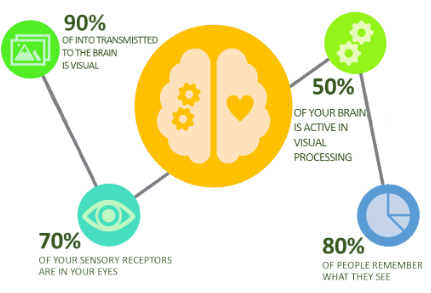
Human beings are brain-programmed around stories. In the pre-written era, we used to communicate in the cave paintings and symbols. The same biological preference is still there today. Research indicates that individuals only retain 10 percent of information three days after listening, and when an image that is relevant to the information is presented, retention becomes 65 percent.
This applies in business where your Page on the site called About Us, or your product introduction is not merely a list of specifications, but the story of your product or service. The syntax of this story is offered by graphic design. It applies the theory of color to create certain emotion blue to give a sense of trust, red to create a sense of urgency and typography to create a voice. The combination of these factors results in a unified brand story that generates revenue.
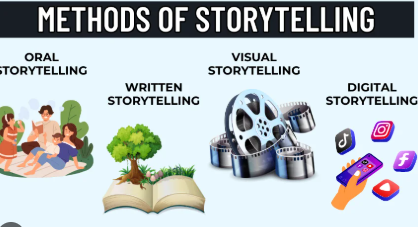
According to IED, Visual storytelling is a practice that has evolved hand in hand with human beings. People have felt the need to communicate and talk about themselves since ancient times, making use of visual, oral, and textual narration.
The Core Pillars of Visual Narrative
In order to use visual storytelling to grow business, designers should consider not only aesthetics, but also communication. A beautiful image may receive a like yet a visual narrative makes a customer.
1. Consistency and Character
A brand is a character of a story. In case such character alters personality each time they speak, the audience will no longer trust them. The visual system, such as the use of logos, color palettes, and imagery, will make sure that the type of character your business will have is identifiable on all platforms.
2. Emotional Resonance
Statistics are persuasive, and emotion is motivating. Visual storytelling determines the pain point of a customer and presents the hero journey of a solution to them. Real-life photography and relatable illustrations enable the customer to imagine themselves as being a part of the brand world.
3. Simplicity and Clarity
The most interesting ones are the stories easy to follow. This would translate to white space, defined hierarchy, and easy-to-follow layouts in graphic design. When a customer needs to struggle to get a visual message, then they will shift to a competitor.
Strategic Implementation Across Channels
Visual dialects vary depending on the platform. Visual narrative approach to business development should be flexible and have a fundamental identity.
| Platform | Storytelling Focus | Key Visual Elements |
| Instagram/TikTok | Micro-narratives & Lifestyle | Short-form video, behind-the-scenes imagery, high-energy color. |
| Authority & Professional Growth | Data visualizations, infographics, clean corporate photography. | |
| Website Landing Page | The Conversion Journey | Clear hero images, “Before/After” visuals, trust badges. |
| Email Marketing | Direct Engagement | Personalized icons, GIF-based product reveals, clear CTA buttons. |
Data Visualization: Turning Complexity into Content
The product is complicated in many B2B companies. In this case, business development visual storytelling is presented in the data visualization form. Rather than simply providing a wall of text or a spreadsheet that is dry and unattractive, designers develop infographics, which convey the story of solving a problem.
- The Problem: An icon-driven chart showing the rise of a specific industry challenge.
- The Process: A flow-chart or “roadmap” visual showing how the business intervenes.
- The Result: A bold, colorful bar graph or “impact” graphic showing the customer’s success.
The Role of Video and Motion Graphics
The pictures are strong but the movement is magnetic. Motion design is already a part of the visual toolkit as we consider the trends in 2026. Motion enables the addition of time to the story of a product changing, a service of service and a testimonial coming to life.
- Micro-interactions: Small animations on a website (like a button changing color) that reward the user for their action.
- Explainer Videos: 60-second animated shorts that distill a 20-page whitepaper into a digestible narrative.
- Cinemagraphs: Still photos with a single moving element that grab attention in a crowded social media feed.
Building a Sustainable Visual Library
The content treadmill is one of the greatest obstacles to visual storytelling in business expansion. Businesses tend to think that they have to produce something very new on a daily basis. A Design System is the answer.
A business can scale by developing a library of reusable assets to create high quality visual stories, namely by building high quality photo filters, high quality layout modules, and high quality custom icons. This does not only save the money but also makes sure that the visual accent of the brand does not go missing, irrespective of what designer or agency is assigned to do a particular project.
Measuring the Success of Visual Stories
How do you know if your visual storytelling is working? It’s not just about “awards” for design; it’s about business metrics.
- Time on Page: If users are staying longer on your blog posts, your visuals are likely engaging them enough to keep reading.
- Conversion Rate: A well-designed “Value Proposition” graphic can lead to a direct spike in sign-ups compared to text alone.
- Social Shares: Visuals that tell a story are inherently more “shareable” than generic advertisements.
- Brand Recall: Surveys that show customers can identify your brand just by its color or style indicate a successful visual narrative.
Future Trends: AI and Personalized Visuals
Moving forward AI is transforming the way we think about visual storytelling to grow a business. We are moving into the era of Generative Branding whereby the images can be tailored to the individual observer. Think of a site whose hero appears depending on the local weather of the user, or a social media advertisement that displays an image of a certain user in the industry.
The tools are evolving, but the need of human-based story is there. The strategy and the soul of the story should be a brand mission, and the pixels are created by AI.
Conclusion
Investing in visual storytelling to grow the business is an investment in the most precious resource that a business possesses relationship with its audience. The skill to narrate a powerful story using design is a superpower in the world where attention is the rarest asset.
Psychological understanding, regular branding, and information-driven graphics enable business to go beyond selling. They can start “connecting.” No matter how small or big you are as a company, your experience is your advantage. Make sure it is a visual one.
Frequently Asked Questions (FAQs)
1. Can I do visual storytelling without a big budget?
Yes. Authenticity often beats high production value. Using a consistent set of mobile photos with a specific filter and clear, honest captions can tell a better story than expensive, generic stock footage.
2. How do I start if I’m not a designer?
Focus on your “Why.” Before you open any design software, write down the emotion you want your customer to feel. Once you have the emotion, the visual choices (colors, fonts, images) become much clearer.
3. Is visual storytelling relevant for boring B2B industries?
Actually, it’s more important in “boring” industries. If everyone else is using dry text and stock photos of handshakes, a brand that uses custom illustrations or engaging data visuals will stand out immediately.
4. How often should I update my brand’s visual story?
Your core “Identity” should stay consistent for years, but your “Tactical” visuals (social media posts, ad campaigns) should evolve with current trends and feedback from your audience.